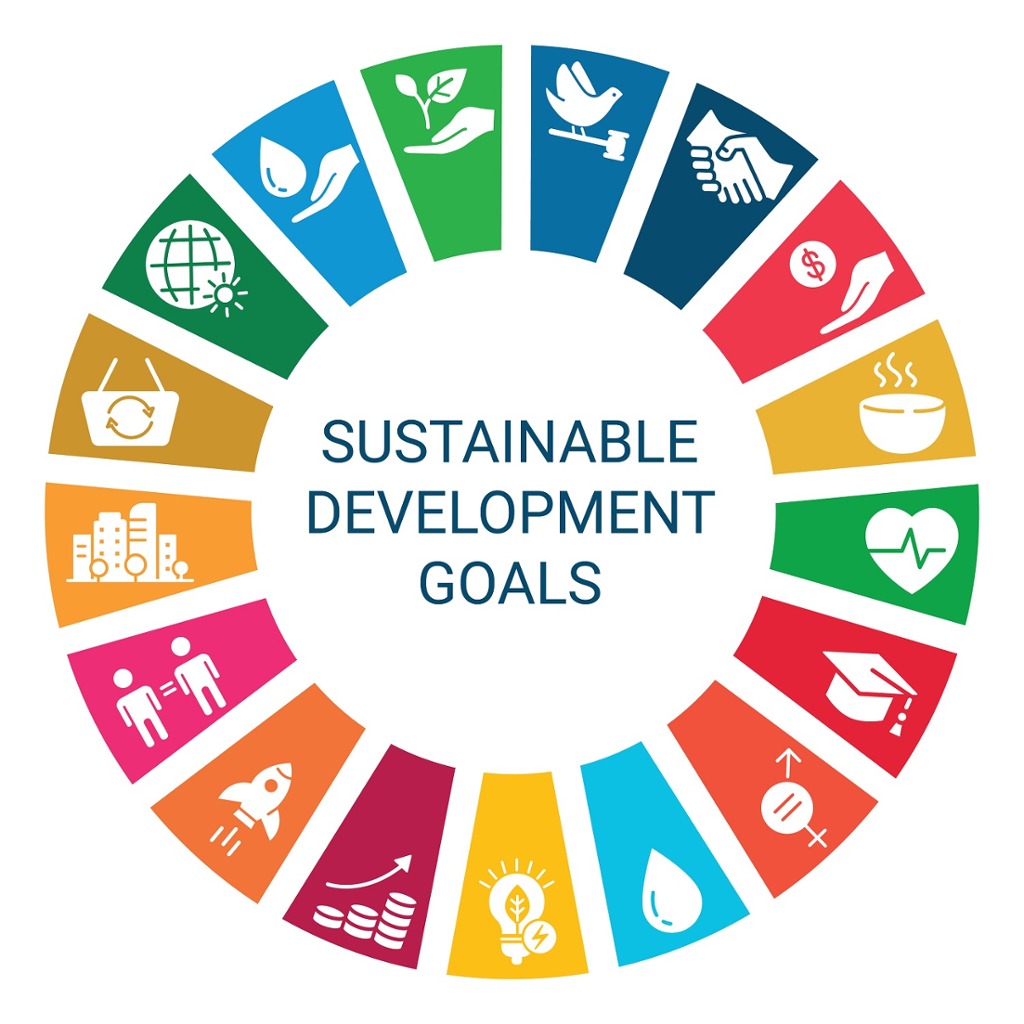
SDGs Launched by the United Nations in 2015, the 17 SDGs aim to transform our world by 2030. They are not just for governments—they are a shared responsibility for individuals, communities, industries, and nations.
The Sustainable Development Goals include:
- No poverty
- Zero hunger
- Good health and well-being
- Quality education
- Gender equality
- Clean water and sanitation
- Affordable and clean energy
- Decent work and economic growth
- Industry innovation and infrastructure
- Reduced inequalities
- Sustainable cities and communities
- Responsible consumption and production
- Climate action
- Life below water
- Life on land
- Peace justice and strong institutions
- Partnerships for the goals
The Sustainable Development Goals cover three key dimensions of development
- Social (e.g., education, health, equality)
- Economic (e.g., decent work, infrastructure, innovation)
- Environmental (e.g., climate action, clean water, life on land)
Each of the 17 goals is supported by specific targets and indicators that help track global and local progress.
Why Are SDGs Important?
- They Provide a Common Global Agenda
- They Offer Measurable Targets
- They Engage All Stakeholders
The Role of Businesses and Industry in SDGs
Sustainable development is not just about charity—it’s also about long-term profitability, innovation, and risk management.
Businesses can:
- Reduce emissions (Goal 13)
- Ensure fair wages and working conditions (Goal 8)
- Use clean technology and sustainable sourcing (Goals 9 & 12)
- Support local communities and education (Goals 1, 4, 10)
Companies aligning with SDGs often:
- Build stronger brand value
- Attract ESG investments
- Future-proof operations
Challenges to Achieving SDGs
Despite good intentions, the world is off track to meet many goals by 2030.
- Climate change accelerating faster than mitigation (Goal 13)
- Rising inequality (Goal 10)
- Conflicts and displacement (Goal 16)
- Lack of data and funding in developing regions
How You Can Contribute
Every action counts. You can:
- Reduce food and energy waste (Goals 2, 12)
- Support local and ethical businesses (Goal 8)
- Raise awareness about climate and sustainability (Goal 13)
- Volunteer for community programs (Goals 1, 3, 4)
- Use your voice to promote equality and inclusion (Goal 5 & 10)
Even small steps at home or work contribute to big changes globally.